This version of the site for Dynamic Dunure was available until the 9th May 2026.
It was taken down following this post.
As can be seen, the site has many of the placeholders from the Wix site template.
It was taken down following this post.
As can be seen, the site has many of the placeholders from the Wix site template.
The first post in this series asked why learning anything about how Dynamic Dunure operates requires a statutory obstacle course —a Freedom of Information request and an internal review, ending in confirmation that no minutes exist. The second looked at how leading Scottish community trusts — on Mull, in Comrie, in Applecross — do things differently: published minutes, open meetings, accounts on the website, project documents shared in full before decisions are taken.
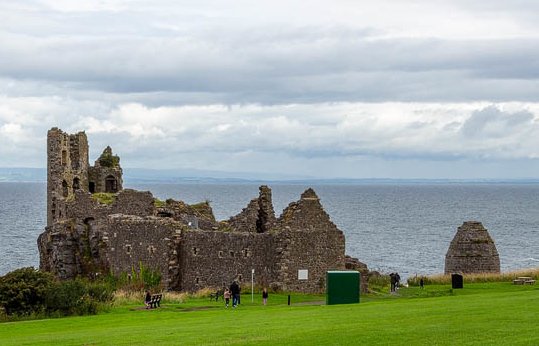
A fair response might be that those are distant places with different circumstances. So this final post stays in Ayrshire. It looks at three examples much closer to home — one in the same council area pursuing the same kind of project, one running the kind of visitor centre Dunure is being promised, and one from Dunure itself.
Barr is a South Ayrshire village considerably smaller than Dunure. Since 2019, Barr Community SCIO (SC049703) has been working — with South Ayrshire Council — to take over the village hall and create a modern, multi-purpose community hub with a café, meeting rooms, hall, kitchen and public toilets. In other words: a project of the same type as the Helm, with the same council, a few miles down the coast.
Here is how Barr Community SCIO communicates:
When Barr’s asset transfer request went to South Ayrshire Council, the Council published the application documents on its own website and invited written representations from anyone. The full paper trail — from community aspiration to Council decision — is public.
If a village of Barr’s size can publish its minutes every month and its business plan in full, the question of capacity does not arise. This is a choice, and Barr made it.
Source: barrvillage.co.uk (Development page: minutes archive, business plan, newsletters); south-ayrshire.gov.uk (asset transfer notice for Barr Community SCIO).
Friends of Dundonald Castle SCIO (SC031541) runs the visitor centre and café at Dundonald Castle — an operation of exactly the kind the Helm is intended to become: a heritage visitor attraction and community hub in a South Ayrshire village, dependent on local volunteers (over 65 of them, alongside 15 staff) and welcoming around 29,000 visitors a year.
FODC’s communication practice:
FODC is the operating reality of what a heritage visitor centre in a South Ayrshire village involves. Its openness is part of why it works: volunteers, members and funders can all see what the organisation does and how it is run.
Source: dundonaldcastle.org.uk (Membership, Community and News pages); FODC trustees’ annual report (OSCR register, SC031541); VisitScotland case study, 2025.
The most telling example is from Dunure itself.
In 2019, North Carrick Community Benefit Company published the Dunure Community Action Plan 2019–2024 — and it remains freely available on the NCCBC website today. What makes it a model is not its conclusions but its transparency about how those conclusions were reached:
Anyone in Dunure can read that document and check what was asked, who answered, and what they said. That is what consultation evidence looks like when an organisation is confident in it.
It is worth being scrupulously fair here: the published 2019 plan records that adults highlighted a purpose-built community centre, and alternative uses for Kennedy Hall, among the priorities for Kennedy Park. Publication cuts both ways — it gives supporters of a community centre a citable, verifiable evidence base, and it lets everyone see precisely what was supported: a community centre in general terms, as one priority among seven, before any specific building, cost, business plan or funding gap existed. That is the entire point. Published evidence can be weighed; unpublished evidence can only be believed or disbelieved.
Dynamic Dunure has stated that surveys show community support for its proposals.
Set that against the three examples above. Barr publishes its business plan and monthly minutes. Friends of Dundonald Castle publishes detailed annual reports and two newsletters. And Dunure’s own Community Action Plan — produced only a few years ago, about this village, partly in this village’s school — published its survey methodology, its participation numbers, and its results in full, dislikes included.
The standard being asked of Dynamic Dunure is not imported from Mull or Perthshire. It is the standard already met in Barr, in Dundonald, and in Dunure itself.
If survey evidence exists and supports the Helm proposals, publishing it costs nothing and strengthens the project’s case with funders, councillors and residents alike. Specifically:
This is part of a series of blogs asking for honest, open and informed debate on the future of Dunure and Fisherton.
Dynamic Dunure is cordially invited to respond to anything in this article. Any response received will be published here in full and unedited. Corrections to any factual error, supported by evidence, will be made promptly and acknowledged.
In short:
Dunure has a community body — Dynamic Dunure SCIO (SC051144) — named in South Ayrshire Council’s National Lottery Heritage Fund application as the intended long-term steward of the project (Appendix 1, “Opportunities” section). The project itself involves just under £900,000 from the National Lottery, alongside a South Ayrshire Council commitment of over £2 million for the Helm building, bridge and associated works — figures reported in Dynamic Dunure’s own newsletter in the North Carrick Community News.
When an organisation speaks for a village and handles decisions of this scale, the question of how it communicates with that village stops being a matter of style and becomes a matter of accountability. The first post in this series described how difficult it is for a Dunure resident to learn even basic facts about how that partnership operates. This post asks the natural next question: what does good communication actually look like for a body of this kind? Fortunately, we don’t have to guess. Scotland has hundreds of community development trusts and community companies, and the best of them have set a clear, achievable standard. This post looks at three of them.
The Scottish Governance Code for the Third Sector, developed by Scotland’s Third Sector Governance Forum and endorsed by SCVO, is the sector’s own statement of best practice. Among its five core principles is board behaviour: a well-run board, collectively and individually, should demonstrate mutual respect, integrity, openness and accountability. The Code applies to organisations of every size — how each principle is met scales with the organisation, but the principle itself does not disappear because a charity is small.
The regulator is moving in the same direction. From 2026, OSCR is publishing charity trustee names on the Scottish Charity Register, and charity accounts submitted from March 2026 will appear on the Register in full — changes OSCR describes as being designed to improve transparency and strengthen public trust in the sector.
In other words: the statutory minimum is rising, and the sector’s own code has always expected more than the minimum. The organisations below show what “more than the minimum” looks like in practice.
Mull and Iona Community Trust (MICT) is one of Scotland’s longest-established community trusts, delivering housing, transport, childcare and environmental projects across the islands.
What stands out is not the scale of its projects but the openness of its practice:
The published minutes are not sanitised summaries. They record who attended, declarations of interest, disagreements, financial figures down to the sale of old laptops, and named action points. A resident of Mull can read exactly what their trust discussed and decided, and who was responsible for what.
Source: mict.co.uk — About Us and Document Library pages.
Comrie is a Perthshire village of around 2,500 people — a community not so different in scale of ambition from Dunure, and its trust took on a far larger asset than anything proposed here: the 90-acre Cultybraggan Camp, bought on behalf of the community in 2007.
Comrie Development Trust (CDT):
Membership is free, and the Trust describes its members as “the lifeblood” of the organisation. Recruitment to the board is advertised openly, including public appeals when more volunteers are needed.
Source: comriedevelopmenttrust.org.uk.
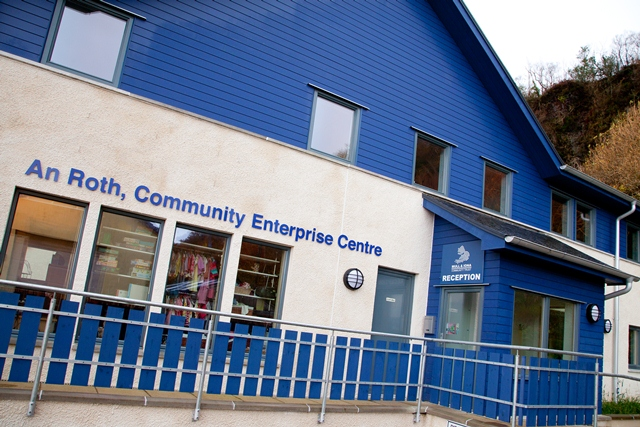
Applecross Community Company (ACC), a registered charity (SC042865) serving a remote Wester Ross peninsula, is perhaps the most directly relevant example, because it has managed major capital projects — community-led housing, a filling station, broadband — and has itself received National Lottery Heritage Fund support.
ACC’s practice:
The February 2015 newsletter is a good miniature of the approach: it told members how many times the directors had met, what training they had received, when the AGM was, that board spaces were available, and how to stand — all in plain language, with a Q&A on the central capital project appended.
Source: applecrosscommunitycompany.org
Across three very different communities, the same habits recur:
None of this requires money. It requires a website page and a decision to be open — Dynamic Dunure already has one sitting unused.
It is worth being precise about one point. Members of any SCIO have statutory duties under section 51 of the Charities and Trustee Investment (Scotland) Act 2005: OSCR’s guidance confirms that SCIO members must seek, in good faith, to ensure the organisation acts consistently with its charitable purposes. Where a membership form restates those duties, it is stating the law, and no criticism attaches to that.
But the comparators show there is a real difference between stating the law and building hurdles around it. MICT, Comrie and Applecross all treat membership as something to be maximised: free, open to all residents, actively encouraged. Where a membership application instead requires prospective ordinary members to declare, in advance, their roles in other village organisations — with those declarations “considered in assessing your application” — the practical effect is worth reflecting on in a small village where active residents are, almost by definition, involved in several groups. Conflict-of-interest management is normally a matter for trustees when decisions are taken, handled through declarations at meetings — exactly as the published minutes of MICT demonstrate — not a filter applied at the door to ordinary membership.
Nothing in this post asks Dynamic Dunure to do anything unusual. It asks it to do what comparable Scottish community organisations already do as a matter of course:
A body that describes itself as representing the collective voice of the village has every reason to welcome that standard. The organisations above show it is not a burden. It is how trust is built.
This is part of a series of blogs asking for honest, open and informed debate on the future of Dunure and Fisherton.
Dynamic Dunure is cordially invited to respond to anything in this article. Any response received will be published here in full and unedited. Corrections to any factual error, supported by evidence, will be made promptly and acknowledged.
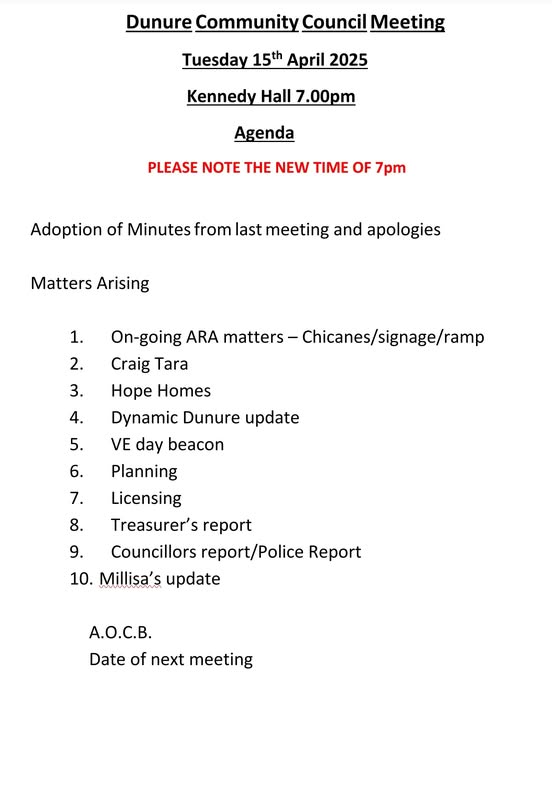
This is a link to the Community Council Website in its current form.
The URL is https://dunure322579784.wordpress.com/about-dunure/.
This was discussed in the meeting of April this year, at which it was claimed that a website was in final draft form.
I’ve not chosen to put this on the front page of the site. It is my policy to put up only positive items to the public area.
This website is committed to open discussion of issues relevant to Dunure and Fisherton, and will publish items expressing opposing points of view as long as they are supported by logical arguments or published documents.
I repeat my offer to host announcements and minutes of the Community Council, Dynamic Dunure, the Harbour Committee or any other community groups.
Members of the community can then use the site’s tag cloud to access items of interest to them.
Action Plan Ayrshire Roads Alliance Beacon Bus Business Pointer Castle Lighting Castle Road Church Co-opted Members Craig Tara Culzean Way Defibrillator Dunure Cemetery Dynamic Dunure Festival of the Sea Gaelic Hall and Park Harbour Harbour Committee Helm Heritage Centre Heritage Lottery Fund Hope Homes Inclusive Meetings Kennedy Drive crossing Kennedy Hall Kirkbride Lighthouse National Lottery Heritage Fund NCCBC Old Well Pedestrian Safety Pub Car Park Road Safety Roadworks Rowing Club Sauchrie Wind Farm Seaview South Ayrshire Council South Road Traffic Calming Viewing Bridge VOIP War Graves Website
If you have items you’d like to see on the site please contact prowrie@dunure.info
Minutes of the Community Council meeting which preceded the AGM. They were approved at the Community Council meeting following the AGM.