How Other Scottish Community Trusts
Talk to Their Villages
In short:
- Dynamic Dunure claim to have an important part in a huge project — almost £900,000 from the National Lottery, plus over £2 million from the Council.
- Because of the sums of money involved, and because Dynamic Dunure claim to be making decisions for the whole village, people here have a right to know what’s going on.
- Other village groups in Scotland show just how this should work.
- Mull and Iona Community Trust publishes its meeting notes online and lets villagers sit in on meetings.
- Comrie Development Trust puts its accounts, minutes and AGM papers on its website for anyone to read.
- Applecross Community Company — a group which, unlike Dynamic Dunure, applied for and received National Lottery Heritage Fund support directly — publishes its full business plans before asking members to vote on them.
- Joining Dynamic Dunure isn’t as open as joining these other groups — applicants have to declare their roles in other village organisations before they’re accepted, which isn’t how the comparable trusts do it.
- None of this costs money. It just takes a website page and a decision to be open.
Dunure has a community body — Dynamic Dunure SCIO (SC051144) — named in South Ayrshire Council’s National Lottery Heritage Fund application as the intended long-term steward of the project (Appendix 1, “Opportunities” section). The project itself involves just under £900,000 from the National Lottery, alongside a South Ayrshire Council commitment of over £2 million for the Helm building, bridge and associated works — figures reported in Dynamic Dunure’s own newsletter in the North Carrick Community News.
When an organisation speaks for a village and handles decisions of this scale, the question of how it communicates with that village stops being a matter of style and becomes a matter of accountability. The first post in this series described how difficult it is for a Dunure resident to learn even basic facts about how that partnership operates. This post asks the natural next question: what does good communication actually look like for a body of this kind? Fortunately, we don’t have to guess. Scotland has hundreds of community development trusts and community companies, and the best of them have set a clear, achievable standard. This post looks at three of them.
The benchmark: what the sector itself says
The Scottish Governance Code for the Third Sector, developed by Scotland’s Third Sector Governance Forum and endorsed by SCVO, is the sector’s own statement of best practice. Among its five core principles is board behaviour: a well-run board, collectively and individually, should demonstrate mutual respect, integrity, openness and accountability. The Code applies to organisations of every size — how each principle is met scales with the organisation, but the principle itself does not disappear because a charity is small.
The regulator is moving in the same direction. From 2026, OSCR is publishing charity trustee names on the Scottish Charity Register, and charity accounts submitted from March 2026 will appear on the Register in full — changes OSCR describes as being designed to improve transparency and strengthen public trust in the sector.
In other words: the statutory minimum is rising, and the sector’s own code has always expected more than the minimum. The organisations below show what “more than the minimum” looks like in practice.
Example 1: Mull and Iona Community Trust
Mull and Iona Community Trust (MICT) is one of Scotland’s longest-established community trusts, delivering housing, transport, childcare and environmental projects across the islands.
What stands out is not the scale of its projects but the openness of its practice:
- Its stated values are “Open, Democratic, Accountable and Enterprising” — and it acts on them.
- Board meeting minutes are published in a document library on its website, year by year.
- Members are welcome to attend board meetings. Membership is open to every resident of Mull and Iona.
The published minutes are not sanitised summaries. They record who attended, declarations of interest, disagreements, financial figures down to the sale of old laptops, and named action points. A resident of Mull can read exactly what their trust discussed and decided, and who was responsible for what.
Source: mict.co.uk — About Us and Document Library pages.
Example 2: Comrie Development Trust
Comrie is a Perthshire village of around 2,500 people — a community not so different in scale of ambition from Dunure, and its trust took on a far larger asset than anything proposed here: the 90-acre Cultybraggan Camp, bought on behalf of the community in 2007.
Comrie Development Trust (CDT):
- Publishes its AGM papers openly. The notice of directors’ elections, accounts, minutes and annual reports all sit on a dedicated AGM page of its website, announced on the homepage.
- Has a large, visible membership — over 450 members, elected board positions, and sub-committees.
- Keeps an open door. The Trust runs a main-street office and explicitly welcomes anybody to come in and talk about what it does.
Membership is free, and the Trust describes its members as “the lifeblood” of the organisation. Recruitment to the board is advertised openly, including public appeals when more volunteers are needed.
Source: comriedevelopmenttrust.org.uk.
Example 3: Applecross Community Company
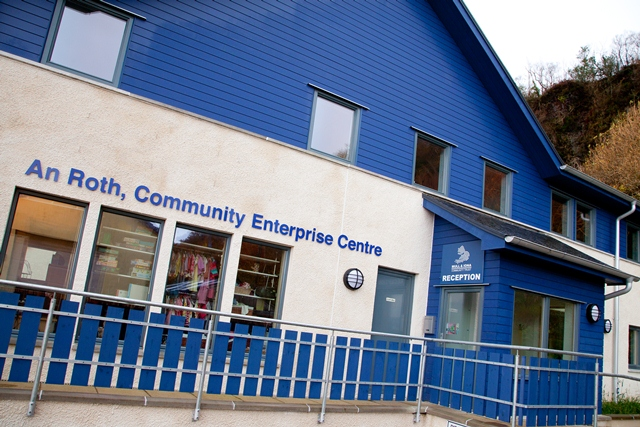
Applecross Community Company (ACC), a registered charity (SC042865) serving a remote Wester Ross peninsula, is perhaps the most directly relevant example, because it has managed major capital projects — community-led housing, a filling station, broadband — and has itself received National Lottery Heritage Fund support.
ACC’s practice:
- Full AGM packs are published online: the meeting booklet with agenda and director nomination form, draft minutes of the previous AGM, and the annual audited accounts — for both the charity and its trading subsidiary.
- Key project documents are published, not summarised. When ACC explored taking on Camusterrach Church, it put the full feasibility study and the full business plan on its website for anyone to read before members voted.
- Regular plain-English newsletters go out by email and are archived on the website. They are written in short, direct sections — one project at a time — and have included question-and-answer sections on major projects, inviting readers to ask directors anything not covered.
- Proxy voting and remote participation are actively facilitated, with named contacts and phone numbers for anyone unsure how to take part.
The February 2015 newsletter is a good miniature of the approach: it told members how many times the directors had met, what training they had received, when the AGM was, that board spaces were available, and how to stand — all in plain language, with a Q&A on the central capital project appended.
Source: applecrosscommunitycompany.org
What these organisations have in common
Across three very different communities, the same habits recur:
- Minutes and agendas are published — routinely, on the website, not on request.
- Meetings are open. Members can attend board meetings (MICT) or are actively equipped to participate in general meetings, including remotely (ACC).
- Accounts and annual reports go beyond the statutory filing. Full audited accounts are placed on the organisation’s own website, where the community actually looks — not just lodged with the regulator.
- Major project documents are published in full. Business plans and feasibility studies are shared before decisions, so members vote on evidence, not assurances.
- Membership is promoted, not merely permitted. It is free, open, described as the lifeblood of the organisation, and accompanied by clear, advertised routes to stand for election.
- Newsletters are written to be read. Short sections, one topic at a time, plain words, and an invitation to ask questions.
None of this requires money. It requires a website page and a decision to be open — Dynamic Dunure already has one sitting unused.
A note on membership conditions
It is worth being precise about one point. Members of any SCIO have statutory duties under section 51 of the Charities and Trustee Investment (Scotland) Act 2005: OSCR’s guidance confirms that SCIO members must seek, in good faith, to ensure the organisation acts consistently with its charitable purposes. Where a membership form restates those duties, it is stating the law, and no criticism attaches to that.
But the comparators show there is a real difference between stating the law and building hurdles around it. MICT, Comrie and Applecross all treat membership as something to be maximised: free, open to all residents, actively encouraged. Where a membership application instead requires prospective ordinary members to declare, in advance, their roles in other village organisations — with those declarations “considered in assessing your application” — the practical effect is worth reflecting on in a small village where active residents are, almost by definition, involved in several groups. Conflict-of-interest management is normally a matter for trustees when decisions are taken, handled through declarations at meetings — exactly as the published minutes of MICT demonstrate — not a filter applied at the door to ordinary membership.
The ask
Nothing in this post asks Dynamic Dunure to do anything unusual. It asks it to do what comparable Scottish community organisations already do as a matter of course:
- publish board and general meeting agendas and minutes;
- publish annual accounts and reports on its own website;
- publish the key documents behind major decisions before they are made;
- open its meetings to members;
- promote membership without pre-vetting applicants’ village affiliations; and
- write newsletters that a busy resident can actually read.
A body that describes itself as representing the collective voice of the village has every reason to welcome that standard. The organisations above show it is not a burden. It is how trust is built.
This is part of a series of blogs asking for honest, open and informed debate on the future of Dunure and Fisherton.
- Does It Really Have To Be This Hard?
- What Good Communication Looks Like
- Closer to Home
- Heritage Centre Plan Scrutiny
Dynamic Dunure is cordially invited to respond to anything in this article. Any response received will be published here in full and unedited. Corrections to any factual error, supported by evidence, will be made promptly and acknowledged.
Sources
- Scottish Governance Code for the Third Sector — goodgovernance.scot / scvo.scot/support/running-your-organisation/governance/code
- OSCR, Scottish Charity Register transparency changes (trustee names and accounts publication, 2026) — oscr.org.uk
- OSCR, SCIOs: A Guide, section 5 (duties of SCIO members) — oscr.org.uk
- Mull and Iona Community Trust — mict.co.uk (About Us; Document Library, incl. published board minutes)
- Comrie Development Trust — comriedevelopmenttrust.org.uk (AGM page); cultybraggancamp.uk (About Us)
- Applecross Community Company — applecrosscommunitycompany.org (News; About Us; newsletter archive)
- Dynamic Dunure, North Carrick Community News, pp. 34–35 (NLHF application figure; SAC funding commitment)
- Charities and Trustee Investment (Scotland) Act 2005, s.51 — legislation.gov.uk